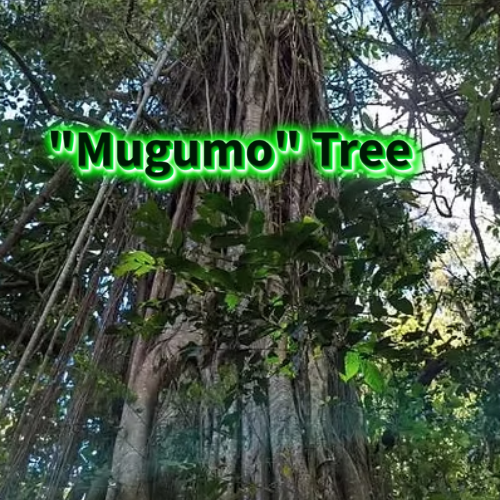
The Mugumo Tree: Sacred Ground and Living Heritage
Spiritually, the Mugumo tree (sacred fig) was revered as “igongona rĩa kũhoya Ngai” — a sacred place to worship and pray to God. It was under the Mugumo that sacrifices were performed and prayers were offered to Ngai, especially during times of thanksgiving, drought, crisis, or community need. The tree was understood as a holy space where the spiritual and earthly realms met — a place of reverence, humility, and covenant.
The Mugumo tree holds deep spiritual and cultural significance within Agikuyu tradition. It was a place where elders performed prayers, sacrifices, and ceremonies to seek blessings, protection, and to give thanks to God. In these sacred gatherings, the community affirmed its faith, unity, and dependence on divine guidance.
In the Agikuyu worldview, the Mugumo tree represents the sacred relationship between people, land, and ancestry. Its roots run deep into the earth, just as cultural identity runs deep within the community. To stand beneath a Mugumo was to stand within a space of spiritual accountability and collective belonging.
The Mugumo Tree in Today’s Context
Today, especially for Agikuyu communities in the diaspora, the Mugumo tree remains a powerful metaphor for cultural rootedness. Though many may live far from ancestral lands, the values symbolized by the Mugumo — strength, unity, wisdom, spiritual grounding, and continuity — continue to guide community life.
As we build institutions, nurture youth, and honor elders, we carry forward the spirit of the Mugumo: firmly grounded in heritage, spiritually anchored in faith, and expansive enough to shelter future generations.
In this way, the Mugumo tree is not only a symbol of the past — it is a living emblem of resilience, identity, sacred devotion, and enduring cultural pride.


Thank you for sharing this. I have learned something new today.